Dress Design Ideas for Dressmaker
Begin with one clear direction, then let the shape, fabric and decorations support it. These ideas are creative starting points illustrated with actual prototype screenshots, not recipes for a guaranteed score.
1. Quiet workwear with a patterned accent
For a workplace commission, begin with the customer's stated purpose. Choose a silhouette that reads practical, then make one fabric or panel the focal point. The pictured example uses plaid across much of the dress, with a calmer upper section. Its result panel also shows the displayed workwear target being met in that specific prototype order.
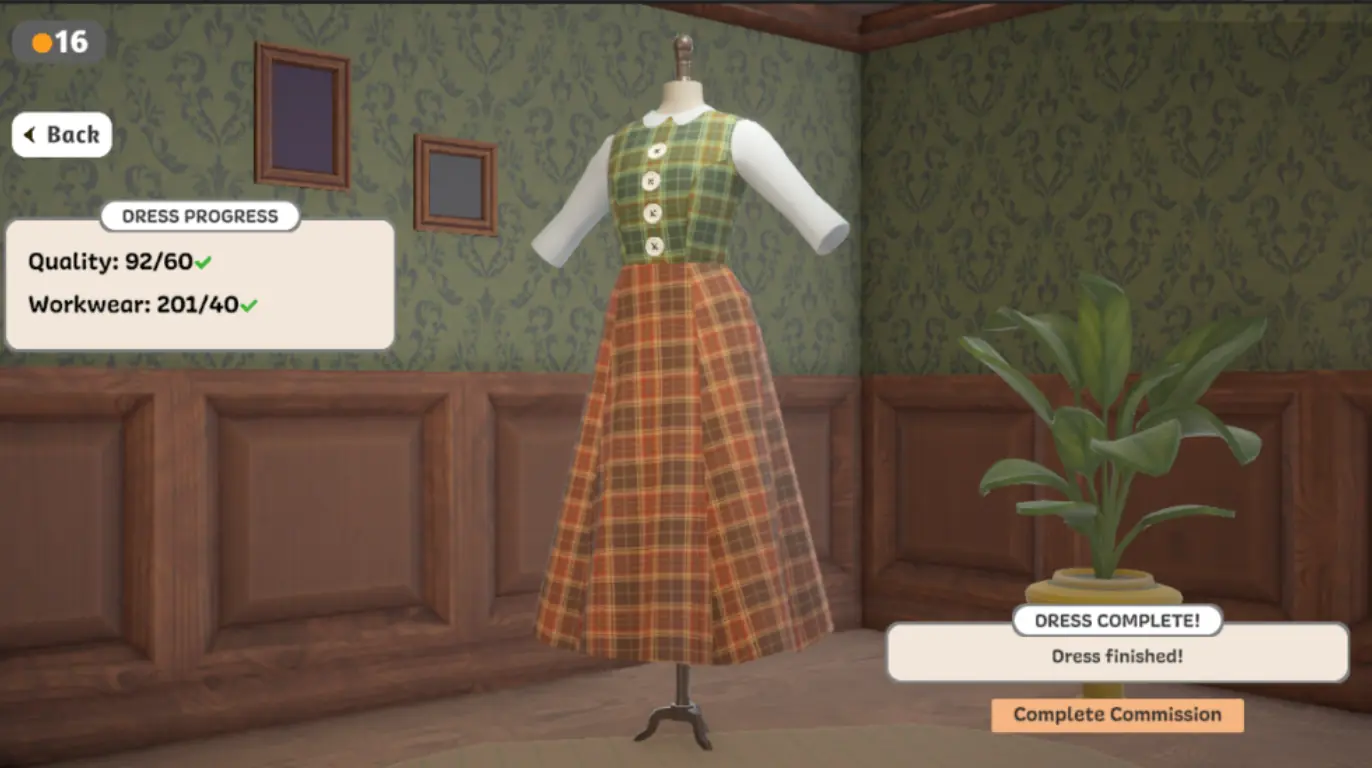
The structure of that dress is worth copying even if you change the fabrics. A calm bodice over a strong skirt gives you two readings at once: the shape stays orderly, and the print does the work. It is a good pattern for a brief like Rose's, where the customer needs something appropriate for a working day rather than an occasion. Try changing just the print, or just the skirt shape, and see whether the whole dress still fits the same brief.
2. Contrast panels for a stronger silhouette
Use a restrained base fabric with one contrasting color or texture on the bodice, skirt or sleeves. Contrast helps the shape read clearly in the sketchbook. It can also become too busy if every panel competes for attention, so check the mannequin before committing to the final arrangement.
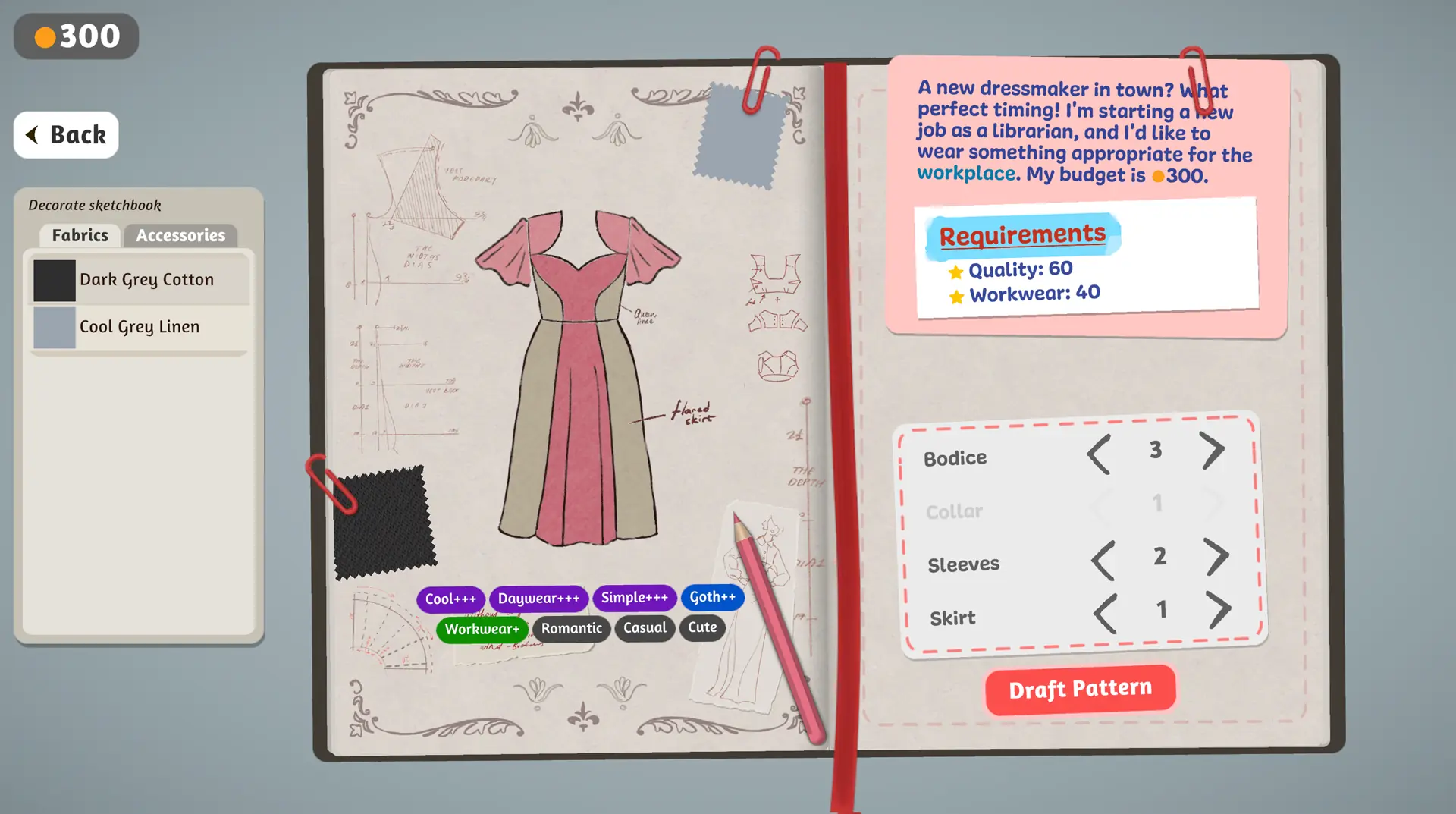
Contrast is also the fastest way to make the style tags move in a direction you want. Changing one panel to a clearly different fabric is more likely to shift how the game reads your design than making a subtle change to every panel. That makes it a useful tool when a brief asks for a specific character and the tags are not following you there. The official Steam description confirms that your fabric arrangement and cutting choices appear on the final dress. Our fabric and pattern guide explains what to check before cutting.
3. An occasion dress with one finishing detail
For a celebration or formal request, choose the mood first: soft, dramatic, playful or restrained. Then pick a silhouette and fabric that work together. Add one decoration to reinforce the idea rather than using every available option. The complete game's official description mentions buttons, bows, appliqué and lace; availability in the prototype can differ.
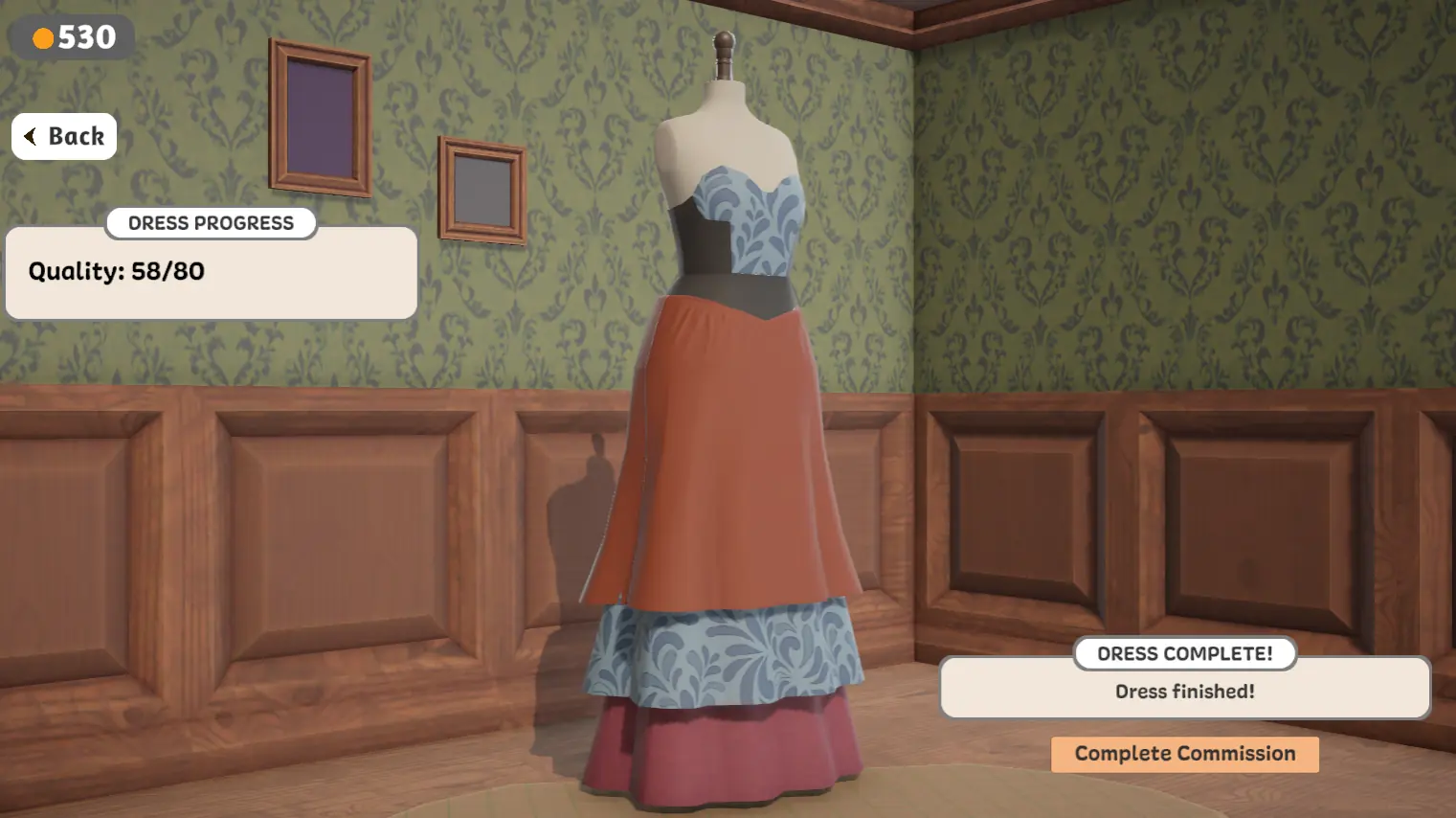
This dress is the same idea as the second one taken further: instead of one contrasting panel, the whole silhouette is built from layered color blocks, and the shape changes from the waist down. Notice that the layer closest to the body is the quietest in colour while the outer skirt carries the pattern, so the eye travels from the plain top to the detailed bottom. That ordering is a deliberate choice, not an accident, and it is the single most reusable trick on this page.
A five-minute design exercise
- Write down the occasion or the feeling you want the dress to have.
- Choose one silhouette and two fabric directions to compare.
- Look at the complete design, not just an individual swatch.
- Keep or remove one detail depending on whether it clarifies the idea.
- If this is a commission, re-read the customer's visible requirements before cutting.
Want to sketch without starting a commission? Our independent dress design studio lets you experiment in the browser and save designs locally. It is a separate tool from the Dressmaker game.
Three things that make a design read as deliberate
- A clear occasion. “Workwear for a librarian” gives you more decisions than “something nice”, because it tells you which options are already excluded.
- One dominant element. A single strong print, a single contrasting panel or a single trim. Two competing focal points usually look like indecision rather than layering.
- An order of attention. Decide what the viewer sees first and let the rest of the dress support it, the way the layered example leads from the plain bodice down to the patterned skirt.
None of these are scoring tips. They are ways to design something you can defend when the result screen comes back and you ask whether the finished dress still serves the brief you started with. The customer request guide covers the other half of that comparison.
Last updated: 24 October 2026